

A Brief Coffee Table Chat | Her Journey in the Travel Industry. One-on-One with Agnes Siarkiewicz 1. What was the biggest early influence that sparked your desire to travel? My desire to travel has always come from a deep explorer’s spirit. Ever since I was young, I’ve been driven by curiosity—the constant need to know what’s around the corner, whether it’s in my own neighborhood or on the other side of the world. Growing up in Poland during a time when traveling abroad was not possible had a huge impact on me. At the time, even summer trips to the mountains or the seaside felt like a privilege. Because international travel was out of reach for so long, it became even more exciting and meaningful in my imagination. When the borders finally opened, I wanted to see everything. Although the economy was still developing and the Polish currency was weak, which made travel difficult, I found creative ways to make it happen. During college, I travelled across Europe with friends—ten people in one car, almost no money, endless optimism, and very low expectations. Those experiences taught me that adventure comes from curiosity, resourcefulness, and openness to the unknown.In many ways, the years of restriction made travel feel even more precious, and that sense of excitement has stayed with me ever since. 2. What was the most important turning point in your professional travel career? The most important turning point in my professional journey was moving from Poland to the United States after living in the same city for 40 years.Up until that moment, my entire professional life had been deeply connected to Poland—its culture, language, and local way of doing business. Relocating to the U.S. meant stepping far outside of my comfort zone and, in many ways, rebuilding my career from the ground up.Instead of seeing that as a setback, I saw it as an opportunity to align my professional path with my personal passion for travel and exploration. I realized I wanted to do something more international, something that connected people, cultures, and experiences.That is what led me to the hospitality industry. For me, working in hospitality has been an exciting adventure from the very beginning because it combines professional growth with the joy of creating memorable experiences for others from around the world. 3. How has your approach to travel evolved over the years? At my core, I still carry the same childlike curiosity to discover what’s behind the next corner. That sense of wonder has never changed.What has changed is the way I choose to travel. Over the years, I’ve become more drawn to authentic, less touristy places rather than crowded destinations. While I still enjoy visiting great cities for their art, architecture, and food, when I travel with intention, I prefer quiet places in nature.I especially love walking through forests, along beaches, and in landscapes that feel untouched by human activity. For me, those places offer a deeper sense of peace and connection. In fact, the forest behind my house is, in my opinion, one of the most beautiful places on earth. It reminds me that travel is not always about going far away. Sometimes, the real evolution in travel is learning how to truly appreciate the beauty of what already exists.
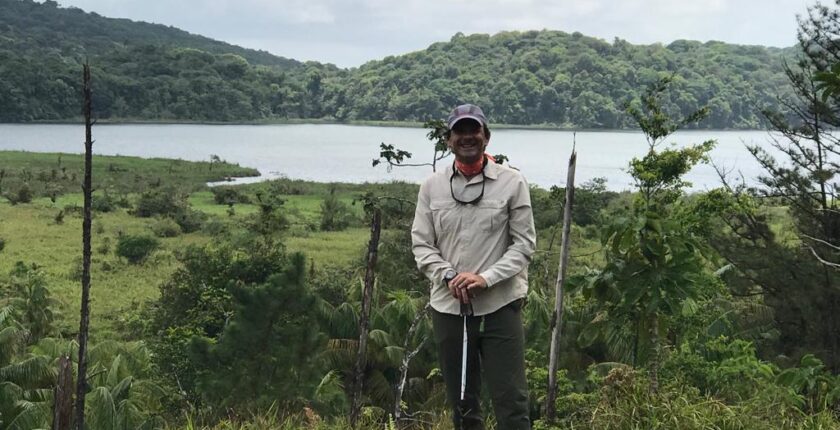
Coffee Table Chat with Jesús Parrilla | From Conviction to Execution
A Brief Coffee Table Chat | From Conviction to Execution One-on-One with Jesús Parrilla We recently sat down with our CEO and Co-founder, Jesús Parrilla, to reflect on what it truly means to build with intention. There is a moment in every company’s journey when the conversation shifts. The question of “will this be funded?” gives way to a different responsibility… now it must be delivered. We find ourselves in that moment. The company is funded. The foundation is in place. What lies ahead is execution, with no room for ambiguity. Looking back, the process of building and the conversations that shaped it have been as revealing as they are instructive. 1. You chose to build the company with governance, compliance, and institutional rigor from day one. Why take that path so early? Most people expect structure to come later. To us, it had to come first. If you know where you are going, you don’t build loosely and then correct. You build with intention from the beginning. Governance, compliance, institutional discipline… these are not constraints. They are what allow you to move with clarity when things become complex. What was interesting is that this approach surprised many investors. Some saw it as unnecessary at an early stage. Others immediately understood that it was the foundation of something that intends to endure. We were never building for convenience, but rather for permanence. 2. In your discussions with investors, what has stood out the most? There is a paradox. Many investors speak about wanting to be part of building great companies. But when faced with what it actually takes to build one properly, the appetite changes. Rigor has a cost, so does discipline. Doing things the right way from the beginning requires patience and capital. And yet, some want the outcome of a robust business without being willing to fund the process that creates it. That tension has been one of the most revealing aspects of the journey. It forces painful clarity on both sides. 3. Outdoor hospitality is often romanticized. How do investors misunderstand that part of the business? The outdoor component is often seen as something poetic. Almost secondary. In reality, it is the most demanding part of the entire system. Operating in remote environments is not something you improvise. It is not something you layer in at the end. It is not a concept. It is knowledge built over time… through exposure, through mentorship, through mistakes, th rough learning to respect forces much greater than ourselves. Weather, terrain, safety, human limits… these are not variables you negotiate with. What surprised us is how often this is underestimated and treated as something that can be figured out later. For us, it was very clear: if we are serious about this space, that expertise has to be present from day one. Not as support but as a core pillar. 4. What has been the most important learning in aligning with investors? Consistency. Some investors truly understand early-stage businesses. They know what uncertainty looks like. They know what building requires. And they lean into it. And then some speak about supporting early-stage ventures, but evaluate them through the lens of something already established. Those two positions cannot coexist. What we learned is that alignment is not about capital; it is about mindset. The right partners don’t just fund the vision. They understand the process behind it… and they respect it.
Coffee Table Chat with Jesús Parrilla | Bulding Frameworks for the Future
A Brief Coffee Table Chat | building frameworks for the future One-on-One with Jesús Parrilla Conservation, when stripped to its essence, is not only about protecting what exists — it’s about ensuring what endures. In this conversation, Jesús Parrilla, Co-Founder and CEO of Experiential Hospitality, explores how the survival of land, culture, and community depends on more than goodwill; it depends on frameworks that bridge ecology, economy, and human dignity. From the delicate balance between philanthropy and permanence, to the invisible structures that make protection last, Jesús invites us to look beyond short-term preservation and toward long-term coexistence. His reflections challenge us to rethink what it means to “protect” — not as exclusion, but as inclusion; not as restraint alone, but as the design of systems where nature, people, and prosperity evolve together. This Coffee Table Chat is not a discussion about conservation as charity, but as architecture — an architecture of trust, structure, and continuity that allows the land, and those who care for it, to thrive long after the spotlight fades. 1. You often say that protecting land begins with understanding its economy. How do you reconcile conservation with financial viability in places where nature itself resists monetization? I have learned over the years that conservation without sustenance is not conservation. If the communities living near a reserve are struggling, neither the forest nor its wildlife will stand for long. Protection begins with dignity; the ability to bring food to the table, to access education and healthcare, to thrive alongside nature rather than apart from it. You also cannot protect what you do not know. Education and direct contact with the land are essential. When people experience ecosystems firsthand, they understand their fragility and value in ways that no report or regulation can convey. Philanthropy plays an important role, but it often fades when donors move on. I have seen this too many times: a generous benefactor passes away, priorities shift, and support disappears. True conservation must outlive generosity. That’s why part of our work focuses on designing economic frameworks that sustain protection indefinitely, so that the land’s survival never depends on sentiment, but on structure. 2. Many conservation projects struggle after the initial funding ends. What are the invisible mechanisms, financial, operational, or cultural, that determine whether protection truly lasts? Philanthropy is a spark, but it cannot be the only fuel, as we learned during the COVID-19 crisis. It can ignite change, but it rarely sustains it. What endures are systems: recurring revenue, local stewardship, and accountability that transcends a single administration or funding cycle. Yet structure alone is not enough. Knowledge and proximity matter just as much. Education helps people understand why protection is necessary; proximity builds emotional ownership. Once communities feel connected to their land, the effort becomes self-propelled. The invisible mechanism is trust; the slow, deliberate trust that grows when people see that protecting nature also means securing their children’s future. 3. In your experience, what distinguishes a “protected” area from a “living” one? A protected area is often static: fenced, regulated, sometimes distant from those who live around it. A living one breathes with the rhythm of its people and its species. Living conservation integrates research, education, responsible tourism, and community engagement into a single, dynamic ecosystem. It is not about keeping people out; it is about bringing the right people in, for the right reasons, under the right conditions. When that balance is achieved, a protected area becomes more than a boundary. It becomes a classroom, a livelihood, and a legacy; a place where learning, earning, and preserving coexist. 4. If land could speak, what would it ask of us as architects, designers, investors, and stewards? It would ask us to slow down. To listen before acting. To understand before extracting. To see the web of interconnection that ties every choice we make to a consequence we might not see. It would remind us that every decision carries weight: financial, ecological, and human. That protection is not absent; it is restraint. And it would tell us that the greatest legacy we can leave is a generation that knows the land well enough to defend it. Because what people know, they protect. What they touch, they love. And what they love, they will never abandon.
Coffee Table Chat with Jesús Parrilla | The Journey of Scarcity
A Brief Coffee Table Chat |The Journey of SCARCITY One-on-One with Jesús Parrilla Luxury has always been a mirror of its time. Once defined by abundance, excess, and status, today it is being redefined by absence, subtlety, and what is quietly slipping away. In this Coffee Table Chat, Jesús Parrilla invites us to rethink luxury through the lens of scarcity—not as deprivation, but as a return to what is rare and essential. From the silence of an untouched forest to the warmth of a fire at the right moment, from fruit picked straight from the tree to the rare gift of an unfiltered conversation, scarcity becomes the new compass of value. This dialogue explores how hospitality can move beyond creating spectacles to protect instead and reveal life’s most fragile luxuries: silence, awe, and presence. What follows is not just a reflection on travel, but a manifesto for how we might care for the rarest resources of all—those that cannot be manufactured, only safeguarded. 1. Luxury used to mean abundance, excess, or status. Yet today, many of those associations feel outdated. In your view, how is the definition of luxury changing, especially as simple, elemental experiences become harder to find? Luxury today is defined by scarcity. Access to raw nature, silence, clean skies, fresh air, and unfiltered conversations are no longer abundant: they are totally disappearing. And as they become harder to find, their value grows. For me, luxury is also contextual precision: the right thing at the right time. A towel when you are wet. A fire when you are cold. Water when you are thirsty. A piece of fruit fresh from the tree. What used to be everyday is now rare, and that rarity is what makes it precious. 2. There’s a paradox in how the simplest things—like watching a sunrise or eating fruit straight from the tree—can feel more valuable than any designed luxury. Why do you think those small moments hold such power for us? Their value comes from their scarcity. The more technology fills our lives, the rarer it becomes to sit with a sunrise, to eat fruit straight from the tree, or to have a conversation with no phone in sight. These are luxuries not because they are extravagant, but because they are slipping away. Hospitality has a responsibility to create conditions where people can rediscover those fleeting luxuries before they vanish completely. 3. Natural spaces are becoming rarer. How should we treat that? We must treat it with reverence, precisely because of its scarcity. A dark sky without light pollution, a coastline without noise or development, a forest untouched; these are no longer common. Scarcity should not push us toward exclusivity, but toward care. When we enter these places, we should remember we are borrowing something rare. And what is rare must be protected, not consumed. 4. Looking ahead, when future travelers think about luxury, what do you believe they will value most? That the truest luxuries will be the scarcest ones: silence, breath, awe, presence. A clear sky. Fresh air. The sounds of nature. These cannot be manufactured, and they are already becoming harder to find. The role of hospitality is not to add more distractions, but to protect and reveal these scarce gifts so travelers can experience them fully and understand their fragility.
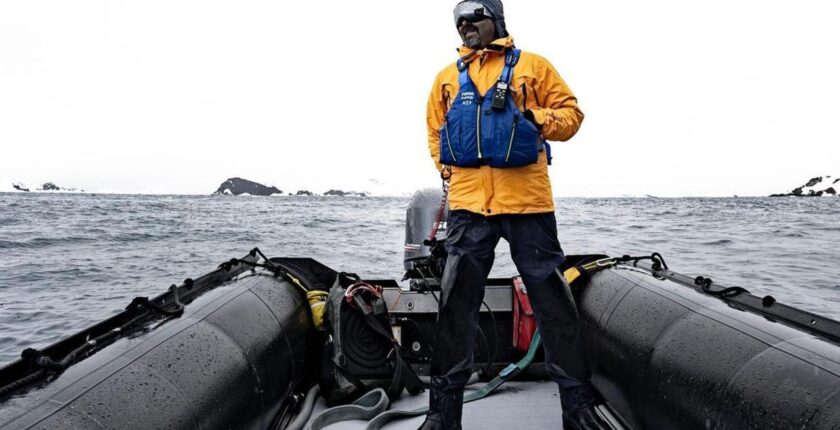
Coffee Table Chat with Willie Parra | The Spirit of Exploration
A Brief Coffee Table Chat |The Spirit of EXPLORATION One-on-One with Willie Parra For Willie Parra, travel has never been about ticking off destinations—it has always been about following curiosity wherever it leads. From his earliest days, inspired by Jacques Cousteau and driven by a fearless urge to dive into every lagoon and explore every creature, his journey has been shaped by wonder. Along the way, he has taken on countless roles—salesman, butcher, night watchman, cameraman, carpenter—each one adding a layer of grit and humility to his path. What ultimately defined his calling was the discovery that adventure could be both a career and a way of life. In this Coffee Table Chat, Willie reflects on the influences that sparked his love of exploration, the turning points that transformed his professional journey, and how his philosophy of traveling without expectation continues to shape the way he engages with the world. His story is a reminder that travel, at its best, is not about luxury or status but about openness, resilience, and the joy of discovery. 1. What was your biggest early influence that sparked your desire to travel? For as long as I can remember, I’ve been passionate about anything unusual… I was lucky to have a close-knit, active family who lived in the countryside and didn’t rely on the classic 8-to-6 office job. Although they were never very outdoorsy people, they were the “let’s go camping, but we’ll stay 50 meters from the car” type… In any case, they never conditioned my constant desire to dive into any lagoon I found or to touch any animal or creature that appeared. My obsession with not missing a single episode of “The Underwater World of Jacques Cousteau” lit that flame in my heart and mind: I had to do it, I had to see these places sooner or later. I’ve been lucky enough to have fulfilled most of those initial dreams… 2. What was the most important turning point in your professional travel career? I’ve done so many things in my life, career-wise. I come from a middle-class family, with an average income and no social connections to help me, so after graduating from high school, the idea of going to college to study Marine Biology was just a dream; there wasn’t enough money to pay for it, so I started working at 18 to be able to pay for it myself. I’ve worked as a clothing salesman, a butcher, a night watchman, a tour driver, an underwater cameraman, a carpenter, and more! But the moment everything changed was precisely when I went to college on my own and discovered a whole new world of activities. That’s when the company VERTICAL invited me to work with them as a Junior Mountain Guide. The rest of my story is something to sit down and talk about over a good wine… 3. How has your approach to travel evolved over the years? I’ve embraced every travel opportunity as a completely new path, without prejudice, without high expectations, just waiting for it to open up and surprise me—for better (ideally) or for worse. It doesn’t matter in the long run. Everything teaches you and prepares you for the next step. I approach it with humility, meaning I arrive receptive and energized. I’m eager to discover the essence of each location, its natural surroundings, and its people. I apply this approach both in urban areas, such as a new European country, and in more remote corners, such as Antarctica or the Arctic. I love traveling and exploring the unknown.
Coffee Table Chat with Julieta Chan | Between Structure & Soul
A Brief Coffee Table Chat |Between Structure & Soul One-on-One with Julieta Chan The hospitality industry is undergoing a profound transformation. Once defined by status and profitability, it now faces an ethical crossroads—where the question is not just how we build, but why we build, and for whom. In this Coffee Table Chat, Julieta Chan invites us into that reflection, sharing her journey of navigating complexity while holding onto purpose. Her perspective is rooted in both pragmatism and vision: the belief that structure—those often invisible systems that create coherence and trust—must coexist with soul, the values and intuition that give hospitality its deeper meaning. What emerges is a portrait of leadership grounded in listening, curiosity, and compassion. For Julieta, building a company is not about selling beds but about creating the conditions for transformative experiences—moments where travelers reconnect with nature, with culture, and with themselves. 1. How has your perception of the industry evolved since joining Experiential Hospitality? This is a personal perspective, shaped by my own experiences and interpretation of what’s happening in the industry, in the world, and in the communities we serve. I believe the industry is facing a moral and ethical crossroads. Profitability has become the dominant metric, accelerated by platforms like Airbnb that opened the sector to players without a tourism background. While this brought innovation, it also disrupted governance and reshaped the commercial landscape. The pace of change has been so rapid that governments and corporations are still struggling to respond—some are searching for solutions, while others remain passive or unaware. Since joining Experiential Hospitality, my perception has remained consistent: in times of chaos, it is essential to return to the core of why we exist. For me, that purpose has never been solely about profitability (though financial sustainability matters). It has always been about connecting people to nature, to different cultures, and to themselves through meaningful experiences—creating the possibility of a more tolerant and humane world through travel. Experiential Hospitality has become the strategy I discovered—or that discovered me—to fulfill that purpose. It offers the alignment, innovation, and sense of meaning that this industry urgently needs. 2. In building internal systems for a company that values emotion and intuition, how do you balance structure with soul? Building structure is not glamorous work—it’s heavy lifting. But it is essential. Structure creates coherence, alignment, and trust across every part of the company. When I design systems or documents, I try to approach them not as rigid rules, but as tools a mentor might use to teach or to create shared understanding—something that enables the team to move together with clarity. The “soul” of the system comes from the lens through which we create it. Every framework must be tested against our values, our philosophy, and our ethical compass. If a system doesn’t serve our purpose or align with our mission, then it needs to be revised and adapted. In this way, structure doesn’t constrain us—it becomes the backbone that gives life to our vision. 3. You’ve been one of the quiet architects of Experiential Hospitality’s growth. What has surprised you most about your own growth through this journey? Earlier in my career, I worked in hotels as a front-of-house manager, ensuring systems ran smoothly and that every guest’s experience was consistently exceptional. My focus was on delivering what was already designed. Now, my role is fundamentally different. I am helping to design the “behind-the-scenes formula” itself—everything from the architecture of a lodge, to the operational strategy, to the way the guest journey is imagined from the very beginning. It’s a rare privilege to sit at the intersection of design, operations, and finance—offering feedback to architects from an operational lens, while also learning how vision gets translated into a physical space, and then ensuring a strong commercial model backs it. 4. What have you learned about leadership from working across cultures, disciplines, and geographies at Experiential Hospitality? First and foremost, to listen deeply. To clear my mind, make quiet judgments, and be fully present with others. Listening in this way is not easy, but it is the key to truly understanding what matters. Second, to stay curious. Curiosity is the foundation of learning, and one of the greatest gifts I’ve cultivated here. It pushes me to ask questions, to uncover what lies beneath, and to keep expanding my understanding through others. Finally, to practice compassion—for myself and for others. Building a company from scratch is full of challenges. We don’t always get it right the first time—or the third. In the past, I judged myself harshly for that. Today, I see vulnerability as strength. Compassion allows me to ask for help when needed and to recognize that what we are building is bold and complex. We are not selling beds; we are selling transformative experiences. That is not an easy story to tell or a simple model to execute. Compassion helps me—and us—stay grounded in patience and persistence as we work to build the global community we envision.
Coffee Table Chat with Jesús Parrilla | In Defense of Meaning
A Brief Coffee Table Chat | In Defense of Meaning One-on-One with Jesús Parrilla In a world where luxury is often reduced to polished surfaces and instant gratification, Jesús Parrilla reminds us that hospitality is not a checklist—it is a calling. As an expert who treats travel as a form of remembering rather than escaping, Parrilla invites us to rethink what it means to host, to journey, and to truly belong. This conversation is not about design trends or brand campaigns. It’s about defending the invisible threads—the ones that connect place to memory, silence to story, host to land. Through quiet conviction and lived experience, Parrilla reveals why feeling, not function, should be the foundation of every guest experience. In this slow and thoughtful exchange, he speaks to the heart of what we do—and why we must continue to do it with care. You’ve regularly said that hospitality isn’t a product—it’s a worldview. How do you ensure that our spaces and services continue to stir something within, especially in an industry often driven by function over feeling We design to provoke memory, not just movement. If a space does not stir something inside you, then it has no reason to exist. The danger in hospitality today is that it has become a checklist of comforts, where utility replaces emotion, where technology and convenience dull curiosity, and superficiality often overshadows depth. For us, every scent, every silence, every surface must feel like it belongs to the story. Not ours alone, but the story of the place. We are not interested in creating what is trendy or cool. We are interested in creating what lingers. What is felt days, even months later, in quiet reflection. That requires discipline. That demands depth of perspective, not just designing. 2. In a world addicted to speed, what does it take to defend the idea that remoteness is sacred—and that the journey itself is part of the experience, not just a means to an end It takes a great deal of conviction. And a willingness to be misunderstood. Remoteness is not a logistical challenge for us. It is a spiritual decision. It reminds the traveler that effort matters. That arrival should not be instant but earned. When you strip away the shortcuts, something ancient reawakens in people. They walk slower. They observe more. They speak less. And in that slowness, they begin to belong. We are not in the business of removing the distance. We are in the business of making the distance meaningful. When the path itself becomes the teacher, then the destination becomes sacred. 3. With so many brands chasing aesthetics or clever messaging, how do you protect the soul of our storytelling—ensuring that what we say is always rooted in what we live?” The story is not the brochure. It is the way the place breathes. It is the way a local guide pronounces the name of a mountain. It is what is left unsaid in a welcome ritual. We protect our story by first making sure it is real. That it was not written at a desk but discovered on foot. Every message must come from something lived. If not, it is just decoration. We are not here to entertain. We are here to remember and to pay homage to the land and the cultures that give the place its soul. And when storytelling becomes a tool for remembering, it stops being a strategy and becomes a form of care. That is the difference. 4. With so many brands chasing aesthetics or clever messaging, how do you protect the soul of our storytelling—ensuring that what we say is always rooted in what we live?” Hosting has been reduced to service metrics. To algorithms and scripted greetings. But true hospitality cannot be automated. It is an ancient act of generosity. An offering of presence. To host is to hold space for another human being. To make them feel seen without needing to speak. To share what is local not as a spectacle, but as a gesture. We train our teams to be guardians of this ritual, not performers of it. And perhaps most importantly, we do not believe the host stands apart from the place. The host is the place. Their voice, their knowledge, their kindness carries the land’s memory forward. That is not transactional. That is sacred.
Coffee Table Chat with Javier Rojas| What If Luxury Could Feel Again?
A brief Coffee Table Chat | What If Luxury Could Feel Again? One-on-One with Javier Rojas Fresh from the Hotel & Resort Design South (HRDS) event in Miami—where he served on the Advisory Board—architect and Chief Creative Officer Javier Rojas-Rodriguez returns not just with insights, but with questions that linger. What if luxury wasn’t about polish, but presence? What if design wasn’t a statement, but a conversation? In this reflection, Javier challenges the industry’s obsession with function, asking us to make room for emotion, memory, and meaning. Through the lens of Experiential Hospitality, he calls for a return to what’s deeply human—and a future of design that doesn’t just impress, but resonates. You’ve attended many conferences over the years, but this time you stood there representing, for the first time, Experiential Hospitality, a company built not just around design, but around emotion, movement, and exploration. How did that shift in lens affect the way you heard the conversations around you? It was a somewhat different experience this time. This time it wasn’t just about representing a company but about embodying a point of view, and a manifesto. In the past, I’d attend conferences thinking about space, guest experiences, construction, or strategy. This time, I was listening for emotion. For how people spoke (or didn’t) about memory, about sensory experience, about the stories behind the spaces. The conversations around me suddenly had more layers. A discussion about materials became a conversation about texture, touch, and childhood memories. A panel on guest engagement became a contemplation on anticipation and surprise. It made me realize that so many in our industry are craving deeper connections—but the industry itself is still using the language of function. With Experiential Hospitality, we’re trying to shift that language. It’s not just about how things are done, but about why and how they’re felt. And standing in that lens, I could feel the difference. 2. Coming from a career where placemaking often began with vision boards and materials, what does it feel like now to represent an analog brand where the place often comes first – and the design must listen before it speaks? It feels like a return to something deeply human. In my previous work, placemaking often began in abstraction—mood boards, materials, aspirations projected onto blank space. Now, I’m learning to approach design more like a conversation than a proclamation. The land, the community, the spirit of the place—they speak first. My role is to listen carefully, to notice what’s already there, and to shape design that feels inevitable rather than imposed. It’s less about storytelling and more about story finding. There’s a humility to it, and also a kind of liberation: the place leads, and we follow. 3. After sitting in rooms filled with conversations about scale, luxury, and innovation, what conversations do you think are still missing, or not being asked loudly enough? I think the conversations that are still missing—or not being asked loudly enough—are the ones about meaning. What does it mean to build at scale, or to create luxury, in a world where cultural and ecological fragility are escalating? We rarely interrogate the emotional, social, and environmental cost of our ambition. There needs to be more space for asking: Who is being left out of the narrative of innovation? What does luxury look like when it’s rooted in empathy, not just exclusivity? How do we measure success beyond aesthetics or ROI? The conversations that are missing are the quieter ones—about dignity, memory, cultural continuity, and restraint. And maybe those aren’t just missing—they’re intentionally avoided. So, I’d say: let’s make room for those. 4. What insights did you walk away with from these events – not just as a creative mind, but now as a brand guardian of something that challenges the norms of luxury hospitality? What struck me most was how essential intention is—both in creation and in operations. As a creative, I’ve always looked for beauty, innovation, and emotion. But also, in the role of brand guardian, those elements must also align with a deeper purpose. These events confirmed for me that the future of luxury isn’t about excess or perfection—it’s about resonance, relevance, and responsibility.
Coffee Table Chat with Julieta Chan | Building with Intention & Designing for Impact
A brief Coffee Table Chat | Building with Intention and Designing for Impact One-on-One with Julieta Chan What does it take to build travel experiences that don’t just impress—but endure? In this Coffee Table conversation, Julieta Chan reflects on the questions that matter most: How can tourism become a force for regeneration? What does it mean to lead with values, not trends? And how do we design journeys that protect the places and people we claim to celebrate? Her answers are shaped by years of deep engagement—from witnessing rewilding efforts to confronting the risks of success in beloved destinations. With honesty, Julieta examines the operational and ethical dimensions of experiential hospitality, and the responsibility involved in building the future of travel. These are her reflections—anchored in purpose, and driven by the belief that travel can and must be a tool for transformation. What moment during your time in Bonito most powerfully illustrated the tension between tourism growth and environmental preservation, and how did it reshape your perspective on what truly responsible travel should look like? Bonito is widely regarded as Brazil’s flagship ecotourism destination, located in the biologically rich region of Mato Grosso do Sul. What struck me most powerfully was not a moment of conflict, but rather a model of harmony between nature and tourism. What was once predominantly an agricultural and cattle farming region is now being gradually rewilded, with former farms regenerating into forest to attract wildlife and protect crystalline rivers and springs. Rather than illustrating a tension, Bonito revealed a hopeful path—where ecotourism is not only compatible with conservation but is actively driving it. What reshaped my perspective was witnessing how private landowners, local entrepreneurs, and public institutions are aligned in building a destination identity that is both ecologically sensitive and economically viable. They are attracting the right kind of traveler—one who seeks meaning, connection, and contribution. A key insight for me was the crucial role of naturalist and adventure guides. They are the ambassadors of the land—educating travelers, ensuring respectful behavior, and weaving powerful narratives of protection and stewardship. This shows that truly responsible travel goes beyond infrastructure or rules—it’s a shared ethic, passed from host to guest, and grounded in respect for place. 2. In your keynote, you emphasized the need for regenerative travel models. After interacting with local stakeholders and exploring Bonito’s community-based efforts, what innovative local practices stood out as scalable or adaptable for other destinations? One standout example was Recanto Ecológico Rio da Prata. What impressed me was the intentionality behind the design—every element of the guest journey is built to protect the river, spark awareness, and cultivate deep respect for the ecosystem. The approach is scientific, but also deeply human. Regenerative travel starts by listening—to the land, to the people, and to the rhythms of the ecosystem. That means involving scientists, biologists, and naturalist guides from the outset. It also means working closely with local communities whose wellbeing is directly tied to the health of the environment. This level of intentional design is absolutely replicable elsewhere—but it requires humility and patience. Regeneration is not just about minimizing harm; it’s about amplifying life. That can only happen when you truly understand the place—its limits, its gifts, and its needs. 3. As someone deeply involved in shaping experiences at Experiential Hospitality, how will what you learned in Bonito influence the way we design journeys, particularly in places that are at risk of becoming the next “overloved” destinations? At Experiential Hospitality, we design immersive journeys—and with that creative power comes great responsibility. Bonito reminded me that success can carry hidden risks. If we’re good at what we do—and I believe we are—we must anticipate the long-term consequences of that success. Not just five years ahead, but twenty. We need to hold the difficult questions early: What if we succeed beyond expectations? What pressure will that put on this ecosystem, this culture, this community? And most importantly: How do we build a growth model that includes the wellbeing of the destination itself? One phrase I often return to is from Stephan Schmidheiny: “There can be no successful companies in failed societies.” In experiential travel, we’re not just selling beds—we’re creating emotional connections to places. If those places become degraded, or if local communities feel excluded or overwhelmed, then we have failed—no matter how strong our brand is. Going forward, we will integrate impact foresight into our product development. That means creating long-term protection plans, cultural preservation strategies, and shared value frameworks. Success, to us, must always include the people and places we serve.
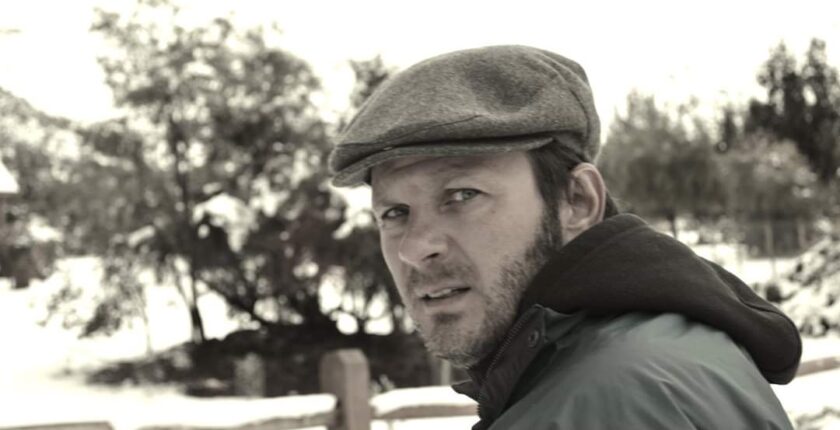
Coffee Table Chat with Jesús Parrilla | Between the Seen and the Felt
A brief Coffee Table Chat | BETWEEN THE SEEN AND THE FELT One-on-One with Jesús Parrilla What if hospitality wasn’t something you built, but something you uncovered? In this intimate Coffee Table, Jesús Parrilla— co-founder of Experiential Hospitality—invites us into the quiet beginnings of a bold vision. From the silence of the Aconcagua Valley to the rhythms of trails and shared meals, this conversation explores the deeper why behind a company that dissolves the boundaries between architecture and land, guest and guide, comfort and courage. As the industry rushes to define “experiential,” Parrilla slows down to ask: What lingers after the journey ends? What was the moment—or series of moments—that made you realize you had to create Experiential Hospitality? In all honesty, it’s never been a single moment. It’s been a quiet accumulation: early involvement in a nascent industry, travel to remote places, long hikes that became meditations, and the silence of landscapes that asked for nothing yet gave everything. But if I had to name a place, I’d say it began in the Aconcagua Valley, in a mountain cabin I built in Chile. I was hiking and biking in the Andes almost every weekend; sometimes alone, sometimes with family. Something in me began to shift, not toward building something new but toward revealing something that already existed. This isn’t my first attempt. It’s my third. So, I have come to understand the difference between momentum and meaning. This time, I wasn’t chasing a model. I was answering a calling. 2. What personal values did you refuse to compromise on when founding the company? We lead, we don’t follow. That principle guides everything. We didn’t build Experiential Hospitality to mimic what others were doing. We built it because I believe the industry needed a deeper why. We put our people first because if the team is nourished, the guest will be too. Safety isn’t negotiable. Adventure can only be transformative if it’s rooted in care and a deep understanding of the nuances of being outdoors. We let architecture emerge from the land, not impose itself onto it. And we don’t speak about sustainability as a feature—it’s the foundation: from how we source food to how we treat water, to how we show up as neighbors. But perhaps the most sacred value is humility. When we enter a place, we do so as listeners first. The land has its own story. Our role is not to overwrite it, but to learn how to belong within it. 3. Was there a gap in the hospitality industry that frustrated you enough to want to fill it? What was missing? I wouldn’t call it frustration. It was more like a quiet observation that kept returning. The gap I saw was subtle but profound: a disconnect between what happens within the hotel and what happens beyond it. Many brands have mastered the indoors. But when the guest steps outside, the spell breaks. The experience becomes fragmented, outsourced, transactional, and often underwhelming. I wanted to build a hospitality company where there is no line between inside and out—where what you feel in the lobby flows seamlessly into what you feel on the trail, at the table, or around a fire. Too often, we obsess over the tangible: thread counts, square footage, wine lists. But the soul of travel lives in the intangible—the sense of awe, of enlightenment, of grounding, of discovery. That’s the space we aim to hold. 4. How do you define “experiential” in a world where that word is now everywhere? For us, “experiential” isn’t a buzzword. It’s a responsibility. It means unlocking what’s felt but not always seen—the wind patterns of a valley, the ritual behind a local dish, the pace of life in a place that’s never rushed to meet the world. Being experiential means designing with the senses and the spirit in mind. It means curating not just activities, but alignments—between people and place, between past and present. In a world rushing toward the next “experience,” we ask: What are you remembering? What are you taking home? What are you reconnecting with? If the answer echoes beyond the itinerary, then we’ve done our work.