

A Brief Coffee Table Chat |The Journey of SCARCITY
One-on-One with Jesús Parrilla
Luxury has always been a mirror of its time. Once defined by abundance, excess, and status, today it is being redefined by absence, subtlety, and what is quietly slipping away. In this Coffee Table Chat, Jesús Parrilla invites us to rethink luxury through the lens of scarcity—not as deprivation, but as a return to what is rare and essential.
From the silence of an untouched forest to the warmth of a fire at the right moment, from fruit picked straight from the tree to the rare gift of an unfiltered conversation, scarcity becomes the new compass of value. This dialogue explores how hospitality can move beyond creating spectacles to protect instead and reveal life’s most fragile luxuries: silence, awe, and presence.
What follows is not just a reflection on travel, but a manifesto for how we might care for the rarest resources of all—those that cannot be manufactured, only safeguarded.
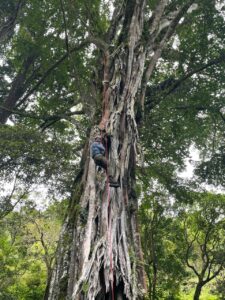 1. Luxury used to mean abundance, excess, or status. Yet today, many of those associations feel outdated. In your view, how is the definition of luxury changing, especially as simple, elemental experiences become harder to find?
Luxury today is defined by scarcity. Access to raw nature, silence, clean skies, fresh air, and unfiltered conversations are no longer abundant: they are totally disappearing. And as they become harder to find, their value grows. For me, luxury is also contextual precision: the right thing at the right time. A towel when you are wet. A fire when you are cold. Water when you are thirsty. A piece of fruit fresh from the tree. What used to be everyday is now rare, and that rarity is what makes it precious.
2. There’s a paradox in how the simplest things—like watching a sunrise or eating fruit straight from the tree—can feel more valuable than any designed luxury. Why do you think those small moments hold such power for us?
Their value comes from their scarcity. The more technology fills our lives, the rarer it becomes to sit with a sunrise, to eat fruit straight from the tree, or to have a conversation with no phone in sight. These are luxuries not because they are extravagant, but because they are slipping away. Hospitality has a responsibility to create conditions where people can rediscover those fleeting luxuries before they vanish completely.
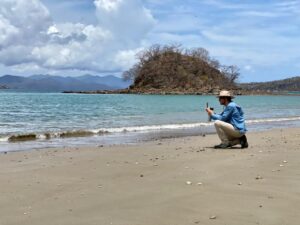 3. Natural spaces are becoming rarer. How should we treat that?
We must treat it with reverence, precisely because of its scarcity. A dark sky without light pollution, a coastline without noise or development, a forest untouched; these are no longer common. Scarcity should not push us toward exclusivity, but toward care. When we enter these places, we should remember we are borrowing something rare. And what is rare must be protected, not consumed.
4. Looking ahead, when future travelers think about luxury, what do you believe they will value most?
That the truest luxuries will be the scarcest ones: silence, breath, awe, presence. A clear sky. Fresh air. The sounds of nature. These cannot be manufactured, and they are already becoming harder to find. The role of hospitality is not to add more distractions, but to protect and reveal these scarce gifts so travelers can experience them fully and understand their fragility.