
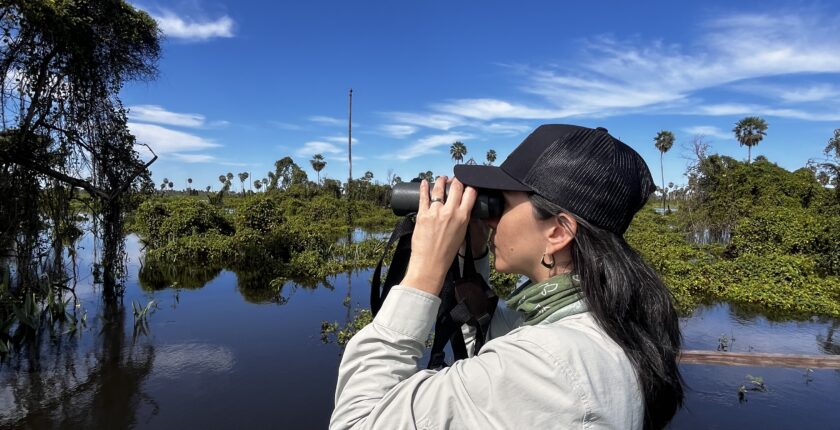
A brief Coffee Table Chat | Building with Intention and Designing for Impact
One-on-One with Julieta Chan
What does it take to build travel experiences that don’t just impress—but endure? In this Coffee Table conversation, Julieta Chan reflects on the questions that matter most: How can tourism become a force for regeneration? What does it mean to lead with values, not trends? And how do we design journeys that protect the places and people we claim to celebrate?
Her answers are shaped by years of deep engagement—from witnessing rewilding efforts to confronting the risks of success in beloved destinations. With honesty, Julieta examines the operational and ethical dimensions of experiential hospitality, and the responsibility involved in building the future of travel.
These are her reflections—anchored in purpose, and driven by the belief that travel can and must be a tool for transformation.
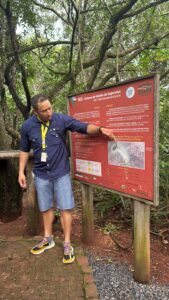
- What moment during your time in Bonito most powerfully illustrated the tension between tourism growth and environmental preservation, and how did it reshape your perspective on what truly responsible travel should look like?
Bonito is widely regarded as Brazil’s flagship ecotourism destination, located in the biologically rich region of Mato Grosso do Sul. What struck me most powerfully was not a moment of conflict, but rather a model of harmony between nature and tourism. What was once predominantly an agricultural and cattle farming region is now being gradually rewilded, with former farms regenerating into forest to attract wildlife and protect crystalline rivers and springs.
Rather than illustrating a tension, Bonito revealed a hopeful path—where ecotourism is not only compatible with conservation but is actively driving it.
What reshaped my perspective was witnessing how private landowners, local entrepreneurs, and public institutions are aligned in building a destination identity that is both ecologically sensitive and economically viable. They are attracting the right kind of traveler—one who seeks meaning, connection, and contribution.
A key insight for me was the crucial role of naturalist and adventure guides. They are the ambassadors of the land—educating travelers, ensuring respectful behavior, and weaving powerful narratives of protection and stewardship. This shows that truly responsible travel goes beyond infrastructure or rules—it’s a shared ethic, passed from host to guest, and grounded in respect for place.
2. In your keynote, you emphasized the need for regenerative travel models. After interacting with local stakeholders and exploring Bonito’s community-based efforts, what innovative local practices stood out as scalable or adaptable for other destinations?
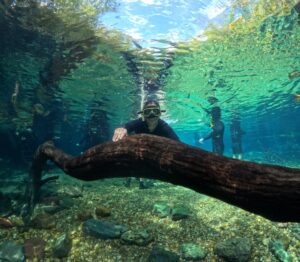
One standout example was Recanto Ecológico Rio da Prata. What impressed me was the intentionality behind the design—every element of the guest journey is built to protect the river, spark awareness, and cultivate deep respect for the ecosystem. The approach is scientific, but also deeply human.
Regenerative travel starts by listening—to the land, to the people, and to the rhythms of the ecosystem. That means involving scientists, biologists, and naturalist guides from the outset. It also means working closely with local communities whose wellbeing is directly tied to the health of the environment.
This level of intentional design is absolutely replicable elsewhere—but it requires humility and patience. Regeneration is not just about minimizing harm; it’s about amplifying life. That can only happen when you truly understand the place—its limits, its gifts, and its needs.
3. As someone deeply involved in shaping experiences at Experiential Hospitality, how will what you learned in Bonito influence the way we design journeys, particularly in places that are at risk of becoming the next “overloved” destinations?
At Experiential Hospitality, we design immersive journeys—and with that creative power comes great responsibility. Bonito reminded me that success can carry hidden risks. If we’re good at what we do—and I believe we are—we must anticipate the long-term consequences of that success. Not just five years ahead, but twenty.
We need to hold the difficult questions early: What if we succeed beyond expectations? What pressure will that put on this ecosystem, this culture, this community? And most importantly: How do we build a growth model that includes the wellbeing of the destination itself?
One phrase I often return to is from Stephan Schmidheiny: “There can be no successful companies in failed societies.” In experiential travel, we’re not just selling beds—we’re creating emotional connections to places. If those places become degraded, or if local communities feel excluded or overwhelmed, then we have failed—no matter how strong our brand is.
Going forward, we will integrate impact foresight into our product development. That means creating long-term protection plans, cultural preservation strategies, and shared value frameworks. Success, to us, must always include the people and places we serve.