
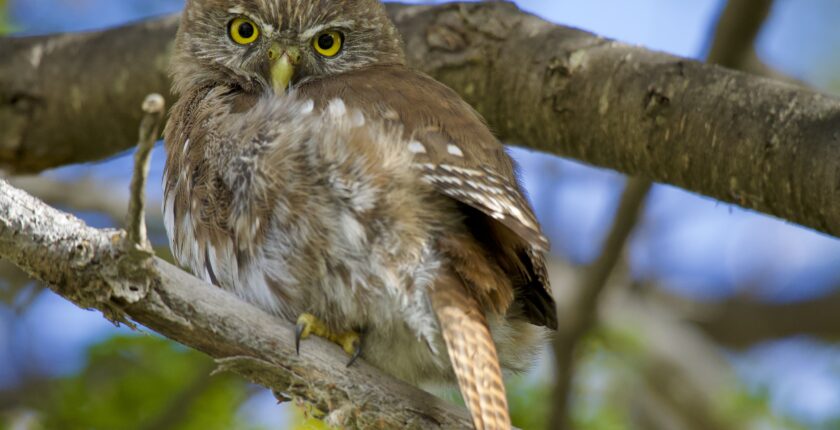
By Willie Parra
Encounters with ourselves
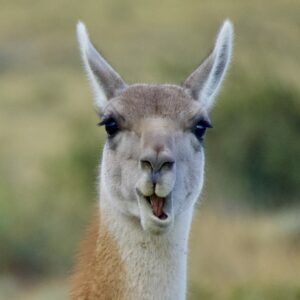 Personally, and over more than 30 years now, I have witnessed magnificent sights in very different latitudes… encounters such as humpback whales approaching your boat without the slightest fear, polar bears with their cubs in the distance, yet feeling much closer thanks to your long-range lens, something magical like a river otter playing near home in Patagonia, or a Pudú (the smallest deer in the world) and its fawns crossing your path, trusting in your prudence and sensing your genuine kindness. Those moments that amaze you and envelop your senses, making every drop of sweat, every chill, or every long wait, worth a thousand times over.
Having the good fortune to witness different species in their natural habitat, free and wild, triggers countless reactions in our brains. Each reaction can be quite different depending on the person, but it is undoubtedly a powerful experience, especially if your heart and mind have opened up and achieved that state of “latent wonder,” that openness to the new, the unknown, the wonderfully wild and natural.
Observing an animal in the wild triggers a profound biological and psychological response, a mixture of atavism (our evolutionary past) and immediate emotional connection. But if we could break down this rollercoaster of sensations, we could explain it like this. Science dissects and describes it perfectly.
Here’s a breakdown of what happens at the brain and sensory levels:
1. The Amygdala “Flash”
When you see a wild animal, the amygdala (the emotional processing center) is instantly activated. Before you rationally identify what animal it is, your brain assesses whether it’s a threat or an opportunity. This generates an adrenaline rush that sharpens your senses: your pupils dilate and your attention becomes selective (the rest of the world disappears).
2. The Reward Circuit
If the encounter is not threatening (like seeing a deer or a whale), the brain releases dopamine. We feel a hypnotic fascination. There’s a hypothesis called Biophilia, suggested by E.O. Wilson, which indicates that humans have an innate affinity for living beings because, evolutionarily, being in environments with healthy wildlife meant survival and resources.
3. “Gentle Fascination” and Mental Restoration
Unlike screens, which drain our attention, observing a wild animal produces what psychologists call gentle fascination. The prefrontal cortex (responsible for logic and planning) rests, reducing cortisol levels (the stress hormone). This explains why we feel a deep peace or a “recharge” of energy after these encounters.
4. The Dissolution of the “Self”
Sensorially, a phenomenon of awe occurs. Awe diminishes the ego, your personal problems fade into the background before the grandeur of nature. Insulin and the parasympathetic nervous system are activated, which reduces heart rate after the initial surprise.
5. Mirror Neurons
If you observe the animal performing an action (hunting, caring for its young, running), your mirror neurons are activated, allowing you to “feel” a form of interspecies empathy. This creates a sense of belonging to the ecosystem, rather than simply being an external observer.
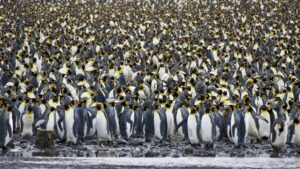
Well… after this landslide of empirical objectivity, it often all boils down to simply observing that unique instant, taking the time to perhaps put the camera aside and treasure those moments with naked eyes of absolute happiness; I’ve seen tears of emotion and smiles of contentment in those vivid moments. What more is needed?
It’s incredibly curious that each time we have these encounters, the wilder and more untamed they are, the more human we become as we deeply appreciate them.
About the author:
Willie Parra
Willie Parra is a naturalist, mountaineer, and Senior PTGA Polar Guide with over two decades of expedition experience. A former Explorations Manager at Explora Hotels, he has guided leadership ventures for Wharton and Queens University across Antarctica, Patagonia, and the Atacama Desert. Today, as Corporate Outdoor Experience Director at Experiential Hospitality, Willie designs nature-based projects worldwide, dividing his time between Santiago and his beloved Chiloé Island.