
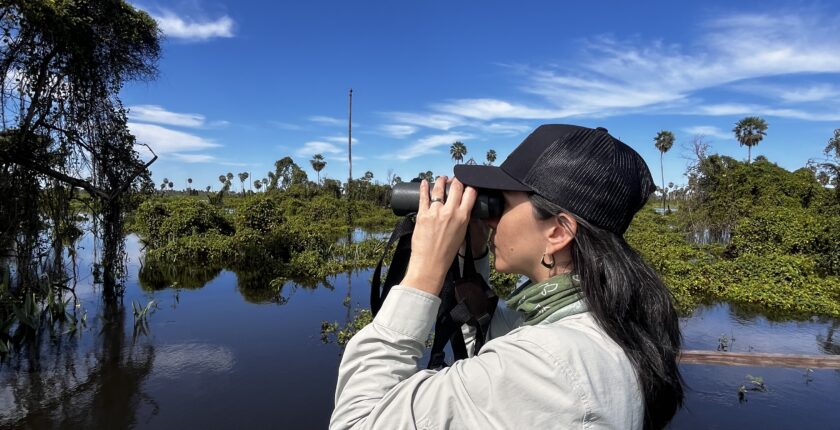
A brief Coffee Table Chat | Building with Intention and Designing for Impact One-on-One with Julieta Chan What does it take to build travel experiences that don’t just impress—but endure? In this Coffee Table conversation, Julieta Chan reflects on the questions that matter most: How can tourism become a force for regeneration? What does it mean to lead with values, not trends? And how do we design journeys that protect the places and people we claim to celebrate? Her answers are shaped by years of deep engagement—from witnessing rewilding efforts to confronting the risks of success in beloved destinations. With honesty, Julieta examines the operational and ethical dimensions of experiential hospitality, and the responsibility involved in building the future of travel. These are her reflections—anchored in purpose, and driven by the belief that travel can and must be a tool for transformation. What moment during your time in Bonito most powerfully illustrated the tension between tourism growth and environmental preservation, and how did it reshape your perspective on what truly responsible travel should look like? Bonito is widely regarded as Brazil’s flagship ecotourism destination, located in the biologically rich region of Mato Grosso do Sul. What struck me most powerfully was not a moment of conflict, but rather a model of harmony between nature and tourism. What was once predominantly an agricultural and cattle farming region is now being gradually rewilded, with former farms regenerating into forest to attract wildlife and protect crystalline rivers and springs. Rather than illustrating a tension, Bonito revealed a hopeful path—where ecotourism is not only compatible with conservation but is actively driving it. What reshaped my perspective was witnessing how private landowners, local entrepreneurs, and public institutions are aligned in building a destination identity that is both ecologically sensitive and economically viable. They are attracting the right kind of traveler—one who seeks meaning, connection, and contribution. A key insight for me was the crucial role of naturalist and adventure guides. They are the ambassadors of the land—educating travelers, ensuring respectful behavior, and weaving powerful narratives of protection and stewardship. This shows that truly responsible travel goes beyond infrastructure or rules—it’s a shared ethic, passed from host to guest, and grounded in respect for place. 2. In your keynote, you emphasized the need for regenerative travel models. After interacting with local stakeholders and exploring Bonito’s community-based efforts, what innovative local practices stood out as scalable or adaptable for other destinations? One standout example was Recanto Ecológico Rio da Prata. What impressed me was the intentionality behind the design—every element of the guest journey is built to protect the river, spark awareness, and cultivate deep respect for the ecosystem. The approach is scientific, but also deeply human. Regenerative travel starts by listening—to the land, to the people, and to the rhythms of the ecosystem. That means involving scientists, biologists, and naturalist guides from the outset. It also means working closely with local communities whose wellbeing is directly tied to the health of the environment. This level of intentional design is absolutely replicable elsewhere—but it requires humility and patience. Regeneration is not just about minimizing harm; it’s about amplifying life. That can only happen when you truly understand the place—its limits, its gifts, and its needs. 3. As someone deeply involved in shaping experiences at Experiential Hospitality, how will what you learned in Bonito influence the way we design journeys, particularly in places that are at risk of becoming the next “overloved” destinations? At Experiential Hospitality, we design immersive journeys—and with that creative power comes great responsibility. Bonito reminded me that success can carry hidden risks. If we’re good at what we do—and I believe we are—we must anticipate the long-term consequences of that success. Not just five years ahead, but twenty. We need to hold the difficult questions early: What if we succeed beyond expectations? What pressure will that put on this ecosystem, this culture, this community? And most importantly: How do we build a growth model that includes the wellbeing of the destination itself? One phrase I often return to is from Stephan Schmidheiny: “There can be no successful companies in failed societies.” In experiential travel, we’re not just selling beds—we’re creating emotional connections to places. If those places become degraded, or if local communities feel excluded or overwhelmed, then we have failed—no matter how strong our brand is. Going forward, we will integrate impact foresight into our product development. That means creating long-term protection plans, cultural preservation strategies, and shared value frameworks. Success, to us, must always include the people and places we serve.
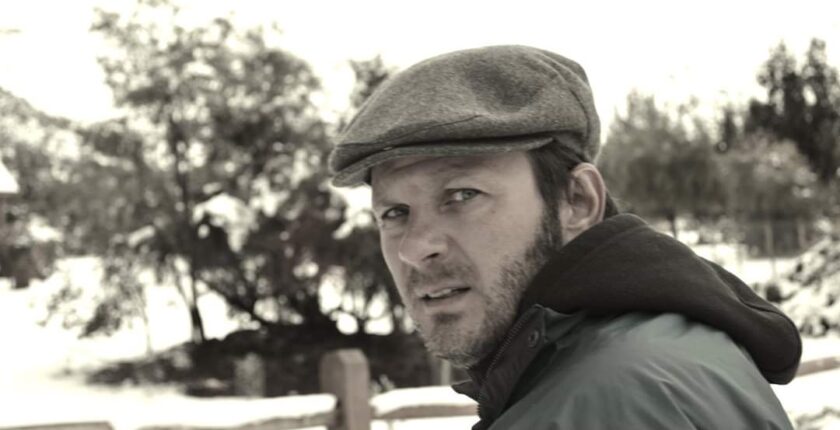
Coffee Table Chat with Jesús Parrilla | Between the Seen and the Felt
A brief Coffee Table Chat | BETWEEN THE SEEN AND THE FELT One-on-One with Jesús Parrilla What if hospitality wasn’t something you built, but something you uncovered? In this intimate Coffee Table, Jesús Parrilla— co-founder of Experiential Hospitality—invites us into the quiet beginnings of a bold vision. From the silence of the Aconcagua Valley to the rhythms of trails and shared meals, this conversation explores the deeper why behind a company that dissolves the boundaries between architecture and land, guest and guide, comfort and courage. As the industry rushes to define “experiential,” Parrilla slows down to ask: What lingers after the journey ends? What was the moment—or series of moments—that made you realize you had to create Experiential Hospitality? In all honesty, it’s never been a single moment. It’s been a quiet accumulation: early involvement in a nascent industry, travel to remote places, long hikes that became meditations, and the silence of landscapes that asked for nothing yet gave everything. But if I had to name a place, I’d say it began in the Aconcagua Valley, in a mountain cabin I built in Chile. I was hiking and biking in the Andes almost every weekend; sometimes alone, sometimes with family. Something in me began to shift, not toward building something new but toward revealing something that already existed. This isn’t my first attempt. It’s my third. So, I have come to understand the difference between momentum and meaning. This time, I wasn’t chasing a model. I was answering a calling. 2. What personal values did you refuse to compromise on when founding the company? We lead, we don’t follow. That principle guides everything. We didn’t build Experiential Hospitality to mimic what others were doing. We built it because I believe the industry needed a deeper why. We put our people first because if the team is nourished, the guest will be too. Safety isn’t negotiable. Adventure can only be transformative if it’s rooted in care and a deep understanding of the nuances of being outdoors. We let architecture emerge from the land, not impose itself onto it. And we don’t speak about sustainability as a feature—it’s the foundation: from how we source food to how we treat water, to how we show up as neighbors. But perhaps the most sacred value is humility. When we enter a place, we do so as listeners first. The land has its own story. Our role is not to overwrite it, but to learn how to belong within it. 3. Was there a gap in the hospitality industry that frustrated you enough to want to fill it? What was missing? I wouldn’t call it frustration. It was more like a quiet observation that kept returning. The gap I saw was subtle but profound: a disconnect between what happens within the hotel and what happens beyond it. Many brands have mastered the indoors. But when the guest steps outside, the spell breaks. The experience becomes fragmented, outsourced, transactional, and often underwhelming. I wanted to build a hospitality company where there is no line between inside and out—where what you feel in the lobby flows seamlessly into what you feel on the trail, at the table, or around a fire. Too often, we obsess over the tangible: thread counts, square footage, wine lists. But the soul of travel lives in the intangible—the sense of awe, of enlightenment, of grounding, of discovery. That’s the space we aim to hold. 4. How do you define “experiential” in a world where that word is now everywhere? For us, “experiential” isn’t a buzzword. It’s a responsibility. It means unlocking what’s felt but not always seen—the wind patterns of a valley, the ritual behind a local dish, the pace of life in a place that’s never rushed to meet the world. Being experiential means designing with the senses and the spirit in mind. It means curating not just activities, but alignments—between people and place, between past and present. In a world rushing toward the next “experience,” we ask: What are you remembering? What are you taking home? What are you reconnecting with? If the answer echoes beyond the itinerary, then we’ve done our work.
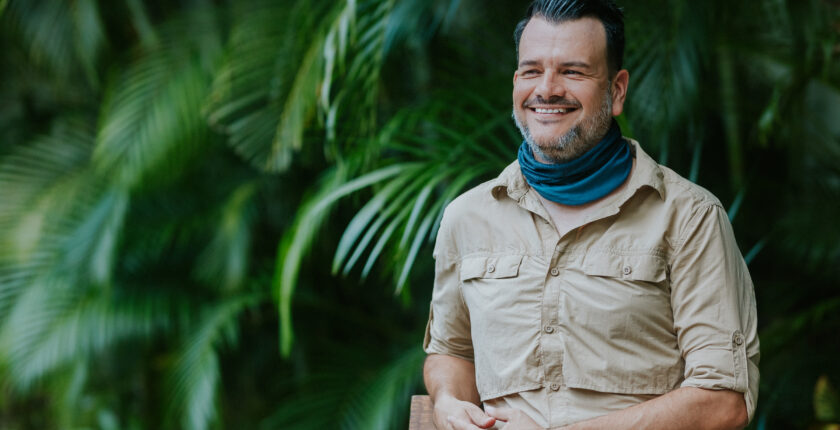
Coffee Table Chat with Javier Rojas| A Journeys that Shape Us
A brief Coffee Table Chat | MODELING BEYOND THE NUMBERS One-on-One with Javier Rojas From childhood road trips through the Mexican countryside to bold academic choices that challenged convention, Javier Rojas-Rodriguez has always approached travel as a path to deeper understanding. In this conversation, he reflects on the experiences that reshaped his view of design and hospitality, and how letting go of structure led to a more immersive, transformative way of moving through the world. What was your biggest early influence that sparked your desire to travel? My desire to travel was first sparked during childhood, on long road trips with my family across the Mexican countryside. Those journeys left a lasting impression on me. I remember sitting by the car window for hours, quietly observing the world as it passed by—the shifting landscapes, the textures of the terrain, the way the colors and light would subtly change from one region to the next. Even then, I was drawn to the idea that every place held its own story, rhythm, and character. Those early experiences didn’t just inspire a love of travel—they awakened a deep curiosity about how people live, how environments shape culture, and how beauty reveals itself in unexpected ways. That curiosity has stayed with me ever since. 2. What was the most important turning point in your professional travel career? Ironically, the most important turning point in my professional journey was choosing to leave a secure and rewarding job in order to pursue a postgraduate degree. I had been fortunate to receive an offer from an Ivy League university in the US—a path that would have seemed like the obvious next step. But instead, I chose something far less conventional: I turned it down and enrolled at The Berlage Institute in the Netherlands. The Berlage wasn’t a typical academic environment. It was more of a laboratory for ideas—a space that encouraged critical thinking, cross-disciplinary collaboration, and questioning the status quo. I was suddenly surrounded by architects, urbanists, and designers from all over the world who were intensely curious, skeptical of easy answers, and passionate about reshaping how we think about cities, landscapes, and the built environment. That time fundamentally reshaped the way I understood design—not just as a profession, but as a cultural and political act. I began to see travel, place-making, and hospitality not just as industries, but as powerful tools for storytelling, connection, and transformation. It shifted my focus from aesthetics and logistics to narrative and experience—how places feel, how they unfold, how they resonate long after the visit ends. That decision—to step away from the expected and embrace the experimental—set the tone for everything that followed in my career. It gave me the confidence to seek out the extraordinary, to stay curious, and to always look beyond the obvious. It taught me that the most meaningful journeys often begin when you leave the map behind. 3. How has your approach to travel evolved over the years? My approach to travel has transformed profoundly over time. In the beginning, it was all about structure and certainty. I was driven by to-do lists, guidebooks, and a clear sense of what I was supposed to see, eat, and experience in each destination. Travel was about maximizing time, checking off the “must-sees,” and feeling a sense of accomplishment for having covered the terrain. But over the years, I began to realize that the most meaningful moments rarely happened according to plan. I slowly let go of the rigidity and embraced a more open, intuitive way of traveling. Now, I deliberately avoid over-scheduling. I leave space for spontaneity. I wander. What I cherish most now is the feeling of being a stranger in a strange land—not knowing the rules, not speaking the language fluently, not having a map for what comes next. That discomfort is no longer something I try to avoid; it’s something I seek. It sharpens my senses. It humbles me. It reminds me how much there is to learn and unlearn. I’ve found that the most transformative travel experiences happen in the in-between moments—in the detours, delays, and unplanned encounters. Whether it’s getting lost in a new city, navigating a challenge with humor and patience, or simply sitting still and absorbing the rhythm of a place, I’ve come to value depth over breadth, presence over productivity. Travel, for me, has evolved from being a curated collection of highlights into a process of immersion, reflection, and growth. It’s no longer about conquering a place—it’s about being changed by it.