
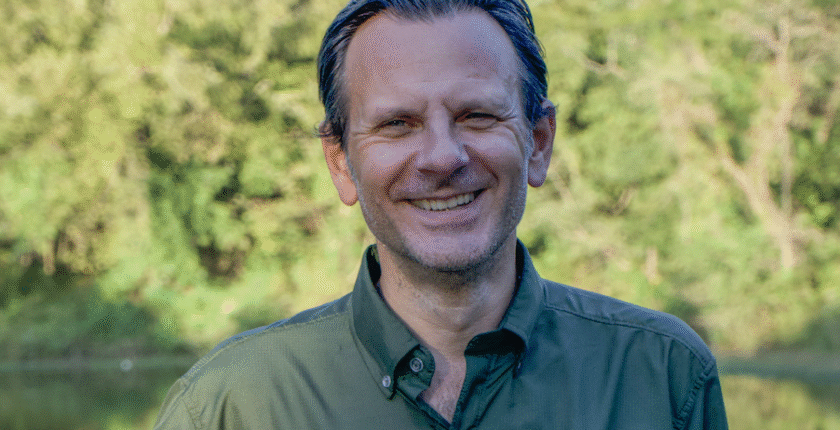
A Brief Coffee Table Chat | building frameworks for the future One-on-One with Jesús Parrilla Conservation, when stripped to its essence, is not only about protecting what exists — it’s about ensuring what endures. In this conversation, Jesús Parrilla, Co-Founder and CEO of Experiential Hospitality, explores how the survival of land, culture, and community depends on more than goodwill; it depends on frameworks that bridge ecology, economy, and human dignity. From the delicate balance between philanthropy and permanence, to the invisible structures that make protection last, Jesús invites us to look beyond short-term preservation and toward long-term coexistence. His reflections challenge us to rethink what it means to “protect” — not as exclusion, but as inclusion; not as restraint alone, but as the design of systems where nature, people, and prosperity evolve together. This Coffee Table Chat is not a discussion about conservation as charity, but as architecture — an architecture of trust, structure, and continuity that allows the land, and those who care for it, to thrive long after the spotlight fades. 1. You often say that protecting land begins with understanding its economy. How do you reconcile conservation with financial viability in places where nature itself resists monetization? I have learned over the years that conservation without sustenance is not conservation. If the communities living near a reserve are struggling, neither the forest nor its wildlife will stand for long. Protection begins with dignity; the ability to bring food to the table, to access education and healthcare, to thrive alongside nature rather than apart from it. You also cannot protect what you do not know. Education and direct contact with the land are essential. When people experience ecosystems firsthand, they understand their fragility and value in ways that no report or regulation can convey. Philanthropy plays an important role, but it often fades when donors move on. I have seen this too many times: a generous benefactor passes away, priorities shift, and support disappears. True conservation must outlive generosity. That’s why part of our work focuses on designing economic frameworks that sustain protection indefinitely, so that the land’s survival never depends on sentiment, but on structure. 2. Many conservation projects struggle after the initial funding ends. What are the invisible mechanisms, financial, operational, or cultural, that determine whether protection truly lasts? Philanthropy is a spark, but it cannot be the only fuel, as we learned during the COVID-19 crisis. It can ignite change, but it rarely sustains it. What endures are systems: recurring revenue, local stewardship, and accountability that transcends a single administration or funding cycle. Yet structure alone is not enough. Knowledge and proximity matter just as much. Education helps people understand why protection is necessary; proximity builds emotional ownership. Once communities feel connected to their land, the effort becomes self-propelled. The invisible mechanism is trust; the slow, deliberate trust that grows when people see that protecting nature also means securing their children’s future. 3. In your experience, what distinguishes a “protected” area from a “living” one? A protected area is often static: fenced, regulated, sometimes distant from those who live around it. A living one breathes with the rhythm of its people and its species. Living conservation integrates research, education, responsible tourism, and community engagement into a single, dynamic ecosystem. It is not about keeping people out; it is about bringing the right people in, for the right reasons, under the right conditions. When that balance is achieved, a protected area becomes more than a boundary. It becomes a classroom, a livelihood, and a legacy; a place where learning, earning, and preserving coexist. 4. If land could speak, what would it ask of us as architects, designers, investors, and stewards? It would ask us to slow down. To listen before acting. To understand before extracting. To see the web of interconnection that ties every choice we make to a consequence we might not see. It would remind us that every decision carries weight: financial, ecological, and human. That protection is not absent; it is restraint. And it would tell us that the greatest legacy we can leave is a generation that knows the land well enough to defend it. Because what people know, they protect. What they touch, they love. And what they love, they will never abandon.
A Journey of Reflection | Lessons From the Heights
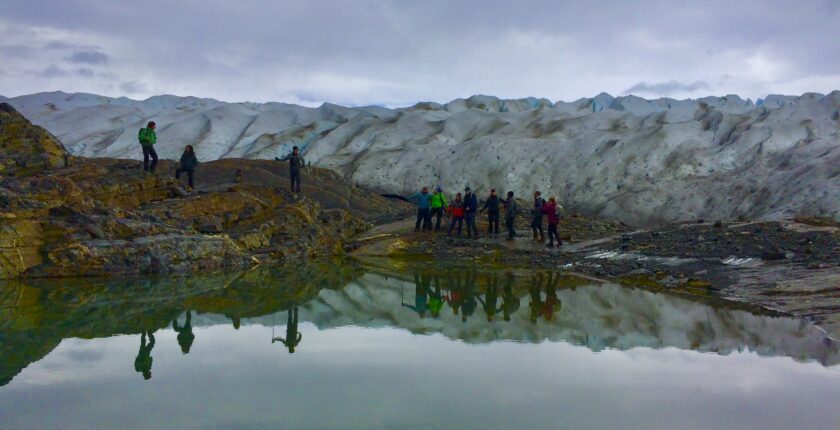
By Willie Parra Lessons from the heights Many years ago, when I began exploring high mountain routes, there were thousands of unknowns and new windows through which to peer into this new world for me, one I discovered almost by chance. Until that moment, 25 years ago, my outdoor world had been primarily underwater, guiding as a PADI Divemaster. This new world of heights pleasantly surprised and amazed me; a singular feeling of immeasurable smallness invaded me, but it wasn’t a sensation that made me feel insignificant; on the contrary, it was like understanding the naked beauty of those places, where everything is so beautiful, yet relentless for those unprepared… Despite the majestic and always breathtaking landscapes I encountered at different latitudes, classic “mountain climbing” gradually transformed into a new way of seeing life from a very special place, independent of its physical cost; it kept you away from the proximity of every day’s “urban” sensations, I would say; new ways of observing and feeling opened up for me. Appreciating the simple and valuing the moment and the company, the journey was much more important than the longed-for summit. Meeting and being part of a generous and professional group of close, approachable, and extremely modest people and friends—contrary to what they might have been after so many successful global summits—gradually led me to that goal. The seed of this new way of true Leading grew under the wing of so much inspiration that surrounded me constantly. But what happens when things don’t go as planned? when we have differences of opinion? when we don’t agree and that disagreement makes us lose our way or, worse still, lose an expedition? Here, many years ago, as I mentioned before, I learned the concept and theory of Experiential Learning, developed by David Kolb, an American educational theorist, who is one of the leading figures in the development of the experiential learning model. This model is defined as the process of learning through experience and emphasizes the importance of reflecting on and applying real-world experiences to deepen knowledge. This approach contrasts with traditional learning methods, which often focus more on theoretical knowledge. Experiential learning helps people develop cognitive and emotional intelligence by engaging them in practical activities where they can apply, experiment, and reflect. I don’t want to go into the broad scope of this concept; I only want to mention its importance in today’s world, where it is increasingly necessary, and it has been proven, that practical learning and experience have made a significant leap forward from classical theory, becoming the primary model for the development of both human groups and individuals. This playfully resembles our childhood, where putting our hands in the mud or jumping into a pond were primary, almost primitive experiences, but filled with perpetual and physically indelible learning. “Experiential learning” is the process of learning through experience and emphasizes the importance of reflecting on and applying real-world experiences to deepen knowledge. This approach contrasts with traditional learning methods, which tend to focus more on theoretical knowledge. Experiential learning helps people develop cognitive and emotional intelligence by engaging them in practical activities where they can apply, experiment, and reflect. In short, the concept and theory of Experiential Learning are four Phases: 1. Concrete Experience This is the stage where the learner encounters a new experience or reinterprets an existing one. It’s about doing something new, participating, or being directly involved in an experience. This might be a hands-on activity, a field trip, a real-world project, or any immersive learning event. 2. Reflective Observation After the experience, the learner reflects on it. This phase is about stepping back and thinking about the experience in detail. Learners consider what went well, what didn’t, how they felt, and any questions or insights that arise. This reflection helps them make sense of the experience. 3. Abstract Conceptualization At this point, the learner begins to make sense of the experience by developing theories, models, or ideas from their reflections. They link the experience to existing knowledge or frameworks. Essentially, they try to understand why things happened the way they did and may formulate new concepts or generalizations. 4. Active Experimentation In the final stage, learners apply the new knowledge they’ve gained by experimenting with it in different situations. They may test out their ideas, hypotheses, or theories in real-life situations to see how they hold up. This cycle encourages the learner to continue the process by acting on their insights, which leads to new experiences, and the cycle starts again. For this concept to be beneficial and achieve the expected results, we cannot ignore or skip any of the four phases. They are essential to achieve a complete development of the theory put into practice. It’s important to note that this process is cyclical, meaning that learners can start at any point in the cycle, but ideally, they will go through all four stages to gain deep learning. The cycle is dynamic and continuous. After working with countless international universities, companies, and all kinds of groups, the results, understanding, and application of the Experiential Learning concept in their lives, both personal and professional, were remarkably positive. Understanding that it’s impossible to grow without learning from our mistakes, discussing them in a timely manner, analyzing them, and harvesting from both good and bad experiences, this new and improved vision as a team and as individuals will definitely help us move forward successfully. About the author: Willie Parra Willie Parra is a naturalist, mountaineer, and Senior PTGA Polar Guide with over two decades of expedition experience. A former Explorations Manager at Explora Hotels, he has guided leadership ventures for Wharton and Queens University across Antarctica, Patagonia, and the Atacama Desert. Today, as Corporate Outdoor Experience Director at Experiential Hospitality, Willie designs nature-based projects worldwide, dividing his time between Santiago and his beloved Chiloé Island.
Coffee Table Chat with Jesús Parrilla | The Journey of Scarcity
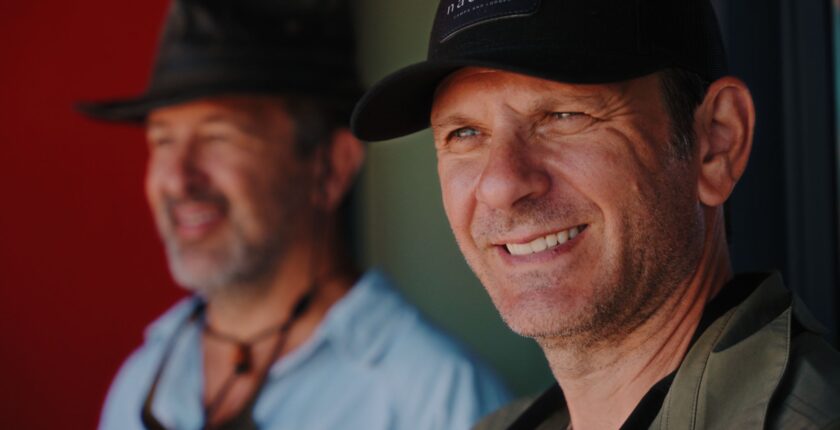
A Brief Coffee Table Chat |The Journey of SCARCITY One-on-One with Jesús Parrilla Luxury has always been a mirror of its time. Once defined by abundance, excess, and status, today it is being redefined by absence, subtlety, and what is quietly slipping away. In this Coffee Table Chat, Jesús Parrilla invites us to rethink luxury through the lens of scarcity—not as deprivation, but as a return to what is rare and essential. From the silence of an untouched forest to the warmth of a fire at the right moment, from fruit picked straight from the tree to the rare gift of an unfiltered conversation, scarcity becomes the new compass of value. This dialogue explores how hospitality can move beyond creating spectacles to protect instead and reveal life’s most fragile luxuries: silence, awe, and presence. What follows is not just a reflection on travel, but a manifesto for how we might care for the rarest resources of all—those that cannot be manufactured, only safeguarded. 1. Luxury used to mean abundance, excess, or status. Yet today, many of those associations feel outdated. In your view, how is the definition of luxury changing, especially as simple, elemental experiences become harder to find? Luxury today is defined by scarcity. Access to raw nature, silence, clean skies, fresh air, and unfiltered conversations are no longer abundant: they are totally disappearing. And as they become harder to find, their value grows. For me, luxury is also contextual precision: the right thing at the right time. A towel when you are wet. A fire when you are cold. Water when you are thirsty. A piece of fruit fresh from the tree. What used to be everyday is now rare, and that rarity is what makes it precious. 2. There’s a paradox in how the simplest things—like watching a sunrise or eating fruit straight from the tree—can feel more valuable than any designed luxury. Why do you think those small moments hold such power for us? Their value comes from their scarcity. The more technology fills our lives, the rarer it becomes to sit with a sunrise, to eat fruit straight from the tree, or to have a conversation with no phone in sight. These are luxuries not because they are extravagant, but because they are slipping away. Hospitality has a responsibility to create conditions where people can rediscover those fleeting luxuries before they vanish completely. 3. Natural spaces are becoming rarer. How should we treat that? We must treat it with reverence, precisely because of its scarcity. A dark sky without light pollution, a coastline without noise or development, a forest untouched; these are no longer common. Scarcity should not push us toward exclusivity, but toward care. When we enter these places, we should remember we are borrowing something rare. And what is rare must be protected, not consumed. 4. Looking ahead, when future travelers think about luxury, what do you believe they will value most? That the truest luxuries will be the scarcest ones: silence, breath, awe, presence. A clear sky. Fresh air. The sounds of nature. These cannot be manufactured, and they are already becoming harder to find. The role of hospitality is not to add more distractions, but to protect and reveal these scarce gifts so travelers can experience them fully and understand their fragility.