
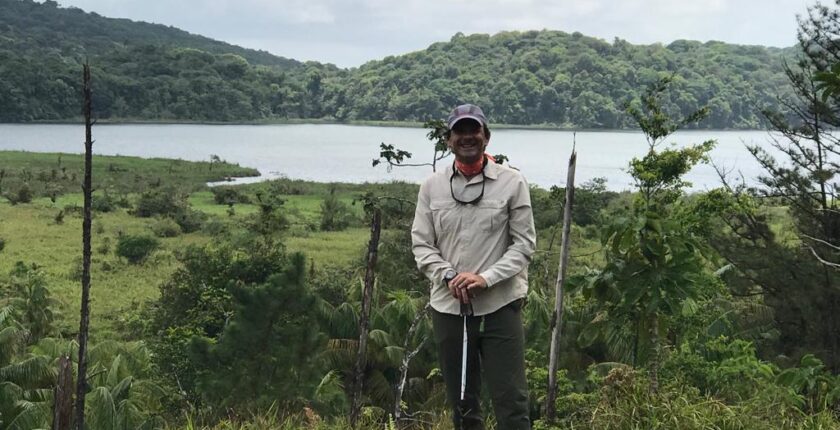
A Brief Coffee Table Chat | From Conviction to Execution One-on-One with Jesús Parrilla We recently sat down with our CEO and Co-founder, Jesús Parrilla, to reflect on what it truly means to build with intention. There is a moment in every company’s journey when the conversation shifts. The question of “will this be funded?” gives way to a different responsibility… now it must be delivered. We find ourselves in that moment. The company is funded. The foundation is in place. What lies ahead is execution, with no room for ambiguity. Looking back, the process of building and the conversations that shaped it have been as revealing as they are instructive. 1. You chose to build the company with governance, compliance, and institutional rigor from day one. Why take that path so early? Most people expect structure to come later. To us, it had to come first. If you know where you are going, you don’t build loosely and then correct. You build with intention from the beginning. Governance, compliance, institutional discipline… these are not constraints. They are what allow you to move with clarity when things become complex. What was interesting is that this approach surprised many investors. Some saw it as unnecessary at an early stage. Others immediately understood that it was the foundation of something that intends to endure. We were never building for convenience, but rather for permanence. 2. In your discussions with investors, what has stood out the most? There is a paradox. Many investors speak about wanting to be part of building great companies. But when faced with what it actually takes to build one properly, the appetite changes. Rigor has a cost, so does discipline. Doing things the right way from the beginning requires patience and capital. And yet, some want the outcome of a robust business without being willing to fund the process that creates it. That tension has been one of the most revealing aspects of the journey. It forces painful clarity on both sides. 3. Outdoor hospitality is often romanticized. How do investors misunderstand that part of the business? The outdoor component is often seen as something poetic. Almost secondary. In reality, it is the most demanding part of the entire system. Operating in remote environments is not something you improvise. It is not something you layer in at the end. It is not a concept. It is knowledge built over time… through exposure, through mentorship, through mistakes, th rough learning to respect forces much greater than ourselves. Weather, terrain, safety, human limits… these are not variables you negotiate with. What surprised us is how often this is underestimated and treated as something that can be figured out later. For us, it was very clear: if we are serious about this space, that expertise has to be present from day one. Not as support but as a core pillar. 4. What has been the most important learning in aligning with investors? Consistency. Some investors truly understand early-stage businesses. They know what uncertainty looks like. They know what building requires. And they lean into it. And then some speak about supporting early-stage ventures, but evaluate them through the lens of something already established. Those two positions cannot coexist. What we learned is that alignment is not about capital; it is about mindset. The right partners don’t just fund the vision. They understand the process behind it… and they respect it.
A Journey of Reflection | Encounters with ourselves
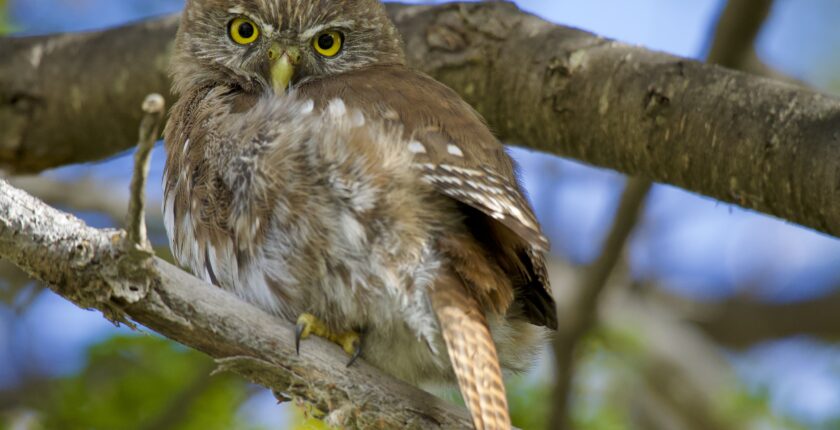
By Willie Parra Encounters with ourselves Personally, and over more than 30 years now, I have witnessed magnificent sights in very different latitudes… encounters such as humpback whales approaching your boat without the slightest fear, polar bears with their cubs in the distance, yet feeling much closer thanks to your long-range lens, something magical like a river otter playing near home in Patagonia, or a Pudú (the smallest deer in the world) and its fawns crossing your path, trusting in your prudence and sensing your genuine kindness. Those moments that amaze you and envelop your senses, making every drop of sweat, every chill, or every long wait, worth a thousand times over. Having the good fortune to witness different species in their natural habitat, free and wild, triggers countless reactions in our brains. Each reaction can be quite different depending on the person, but it is undoubtedly a powerful experience, especially if your heart and mind have opened up and achieved that state of “latent wonder,” that openness to the new, the unknown, the wonderfully wild and natural. Observing an animal in the wild triggers a profound biological and psychological response, a mixture of atavism (our evolutionary past) and immediate emotional connection. But if we could break down this rollercoaster of sensations, we could explain it like this. Science dissects and describes it perfectly. Here’s a breakdown of what happens at the brain and sensory levels: 1. The Amygdala “Flash” When you see a wild animal, the amygdala (the emotional processing center) is instantly activated. Before you rationally identify what animal it is, your brain assesses whether it’s a threat or an opportunity. This generates an adrenaline rush that sharpens your senses: your pupils dilate and your attention becomes selective (the rest of the world disappears). 2. The Reward Circuit If the encounter is not threatening (like seeing a deer or a whale), the brain releases dopamine. We feel a hypnotic fascination. There’s a hypothesis called Biophilia, suggested by E.O. Wilson, which indicates that humans have an innate affinity for living beings because, evolutionarily, being in environments with healthy wildlife meant survival and resources. 3. “Gentle Fascination” and Mental Restoration Unlike screens, which drain our attention, observing a wild animal produces what psychologists call gentle fascination. The prefrontal cortex (responsible for logic and planning) rests, reducing cortisol levels (the stress hormone). This explains why we feel a deep peace or a “recharge” of energy after these encounters. 4. The Dissolution of the “Self” Sensorially, a phenomenon of awe occurs. Awe diminishes the ego, your personal problems fade into the background before the grandeur of nature. Insulin and the parasympathetic nervous system are activated, which reduces heart rate after the initial surprise. 5. Mirror Neurons If you observe the animal performing an action (hunting, caring for its young, running), your mirror neurons are activated, allowing you to “feel” a form of interspecies empathy. This creates a sense of belonging to the ecosystem, rather than simply being an external observer. Well… after this landslide of empirical objectivity, it often all boils down to simply observing that unique instant, taking the time to perhaps put the camera aside and treasure those moments with naked eyes of absolute happiness; I’ve seen tears of emotion and smiles of contentment in those vivid moments. What more is needed? It’s incredibly curious that each time we have these encounters, the wilder and more untamed they are, the more human we become as we deeply appreciate them. About the author: Willie Parra Willie Parra is a naturalist, mountaineer, and Senior PTGA Polar Guide with over two decades of expedition experience. A former Explorations Manager at Explora Hotels, he has guided leadership ventures for Wharton and Queens University across Antarctica, Patagonia, and the Atacama Desert. Today, as Corporate Outdoor Experience Director at Experiential Hospitality, Willie designs nature-based projects worldwide, dividing his time between Santiago and his beloved Chiloé Island.
A Journey of Reflection | The art of guiding Reflections on Presence, Trust, and Shared Discovery
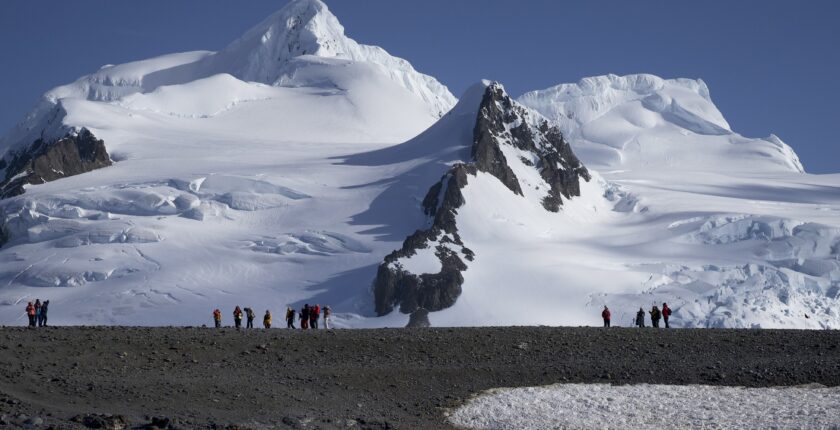
By Willie Parra The art of guiding Reflections on Presence, Trust, and Shared Discovery The concept of “Guiding” can be defined as something as simple and basic as: showing the way, leading, or directing someone or something, often through instruction, influence, or by being a source of direction, like a compass or a mentor, implying continuous direction or a gentle leading hand. Or something as complex, profound, and meaningful as when it is applied to outdoor activities and experiences involved in. The act of Guiding carries countless meanings, responsibilities, and tasks, both tangible and intangible. It is a unique opportunity, through shared experience and the guide’s timely support, to help others discover, to see with new eyes, to take the time to open up their own innermost emotions; it is allowing oneself to be captivated by this new world, often so foreign to our daily lives. The concept of being “the Guide” might sometimes sound a bit pretentious or condescending to some. But as I personally define and feel it, it is a sincere and respectful companionship. It’s about walking together along a path where I, as your guide, am intimately familiar in every way, adapting to your level and expectations of what lies ahead. It’s about preparing each day with the intention of surprising you, of creating those moments that will stay with you forever. A guide must be generous, someone who adapts to the level of their companion. They must allow for those crucial moments where the silence of a particular moment speaks volumes internally. A guide has the ability to read between the lines, to know when to contribute a relevant story and when to provide that personal space for introspection; to offer those moments of silence, so scarce these days. A guide must understand and act in accordance with the nature of their traveler; different latitudes and cultures offer us clues on how to be much more empathetic, respectfull and close, depending on their nature and origins. This can be learned beforehand to ensure an even better experience on this adventure. There are cultures where precision and punctuality are paramount… there are others where enjoying life without constraints or main guidelines are a priority. And there are those where introspection and respect for the present moment are vital. There is much to consider and prepare for to be a respectable guide. It’s not just technical skill that leads to perfection, which is non-negotiable and must be constantly applied; it’s also the intangible, precisely what isn’t necessarily written in a manual, but which requires our emotional and cultural intelligence to communicate without words. The best in ourselves is reflected, the Guide-Traveler experience grows, and transforms us personally each time we leave the concrete jungle behind and immerse ourselves, body and soul, once again in this marvelous biodiversity for a few days or weeks, helping us to return to our most ancient roots, rediscovering ourselves, and achieving that ancestral connection. A guide is a friend. They are someone who has expressly chosen to follow this path professionally and consciously because they deeply believe that being closer to the natural world, to the rivers and mountains, to the jungles and beaches, to indigenous and ancestral cultures, gives us the unique opportunity to embrace others, inviting them to see this world with different eyes, to show us the way and return to respecting our origins and understanding with certainty why we must protect it. About the author: Willie Parra Willie Parra is a naturalist, mountaineer, and Senior PTGA Polar Guide with over two decades of expedition experience. A former Explorations Manager at Explora Hotels, he has guided leadership ventures for Wharton and Queens University across Antarctica, Patagonia, and the Atacama Desert. Today, as Corporate Outdoor Experience Director at Experiential Hospitality, Willie designs nature-based projects worldwide, dividing his time between Santiago and his beloved Chiloé Island.