
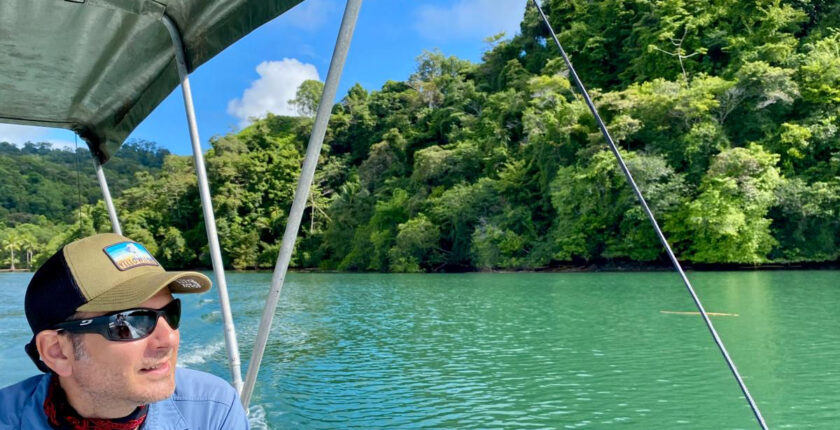
A brief Coffee Table Chat on His Journey in Sustainability One-on-One with Jesús Parrilla In this special edition, we bring you an insightful and engaging interview with our CEO, Jesús Parrilla. Through a series of thought-provoking questions, Jesús shares his personal and professional views on sustainability. Discover what sustainability means to him, how he integrates sustainable practices into his daily routine, and his perspective on the most significant challenges facing the travel and hospitality industry in its quest for sustainability. Join us as we delve into these critical topics and gain valuable insights from a leader committed to making a positive impact. 1. What does sustainability mean to you? To me, the concept of sustainability has evolved over the years. It started with tangible initiatives like recycling and has grown to encompass more intangible ones related to social justice. I now understand that sustainability requires a holistic, 360- degree approach. It involves regeneration, conservation, rewilding, and addressing climate change, as well as social action, equality, and good citizenship. Over the years, I have had the honor of managing and operating hotel and tourism companies in some of the world’s most naturally beautiful and culturally vibrant destinations. This hands-on experience has provided me with a broad, sensitive, and sensible perspective on sustainability, community involvement, and the impact of tourism development in pristine destinations. Sustainability also aligns deeply with my personal values of respect for nature and humanity. I believe in the power of innovation to drive sustainable solutions and the importance of continuous learning and adaptation to address emerging environmental and social challenges. Furthermore, I recognize that sustainability is not just a goal but a arduous journey that requires ongoing commitment and collaboration across all sectors of society. This awareness of the fragility of our planet and its inhabitants motivates me to advocate for and implement sustainable practices in both my personal and professional life. 2. How do you incorporate sustainable practices into your daily routine at work and in your personal life? I am consistent in incorporating sustainable practices both in my personal and professional life. Practicing sustainable initiatives at home complements my efforts at work. In my personal life, I engage in activities such as recycling, responsible food consumption, minimizing energy and water use, waste management and composting, and reforestation. Additionally, I follow a regenerative framework by supporting biodiversity in my garden and restoring natural habitats in my community whenever possible. I am also involved in social causes like supporting food banks and strive to live in harmony and respect with my neighbors and the broader community. At work, I believe every business must consider its environmental footprint and integrate sustainable practices into daily administrative and operational processes. This includes adopting energy-efficient technologies, reducing waste, sourcing materials responsibly, and promoting a regenerative approach to business that aims to leave the environment in a better state than we found it. By fostering a culture of sustainability among employees and stakeholders, we can make a significant impact and inspire others to follow suit. 3. In your view, what is the most significant challenge that travel and hospitality businesses encounter when striving to become more sustainable, and how do you suggest they overcome it? I believe the biggest challenge lies in the lack of commitment from investors, owners, and top management, along with a misunderstanding of the importance of adopting responsible business practices that ensure the long-term viability of their operations and the ecosystems they operate in. Additionally, there is often a misunderstanding of the short-term financial costs associated with becoming sustainable. Many fail to see that these initial investments can lead to substantial long-term savings and benefits, including enhanced brand reputation and customer loyalty. For those not naturally inclined towards sustainability or unaware of its importance, market intervention is key—whether driven by customer demands, financial markets, or government legislation. Ideally, businesses should voluntarily adopt sustainable practices rather than be compelled by legislation. By educating stakeholders about the long-term financial benefits and positive environmental impacts, we can encourage a proactive approach and commitment to sustainability. Download PDF version

A One-on-One with Julieta Chan | Sustainability
Coffee Table Chat on Her Journey in Sustainability One-on-One with Julieta Chan Julieta Chan, a passionate advocate for sustainability in Costa Rica’s tourism industry, has seamlessly integrated eco-friendly practices into her professional and personal life. Her work and lifestyle reflect a deep commitment to environmental stewardship and community support. Join us as we chat with Julieta about her inspiring journey and the values that drive her dedication to sustainability. 1. What does sustainability mean to you within the travel and hospitality industry, and how do you define it in both your professional and personal life? Sustainability has been the cornerstone of my career in the tourism industry. In Costa Rica, sustainability has been the guiding strategy for over 30 years. It’s a model I was raised in and has been part of my lifestyle since childhood. I have always been inspired by the idea that one can work in nature, educate others about environmental protection, and make a living doing something impactful and enjoyable. Professionally, sustainability has profoundly shaped my career. My first job in the hospitality industry, as a Housekeeping Manager, involved creating a recycling program for a 100-room urban hotel in downtown San Jose. To make this initiative viable, I needed to collect enough recyclable materials to attract a recycling truck and ensure profitability for both parties. This led to the “Block Project,” which unified block Volume 2| Number 2 Date: August 2024 “Sustainability has been the cornerstone of my career in the tourism industry. In Costa Rica, sustainability has been the guiding strategy for over 30 years.” One-on-One with Julieta Chan: A brief Coffee Table Chat on Her Journey in Sustainability 2 leaders, hotels, restaurants, and stores around us to participate in a recycling route. This project resulted in the first commercial recycling line in San Jose and earned me a scholarship in International Marketing. Later, I led the municipality’s recycling program for over three years. Sustainability is also a core value in my household. My family has had an organic compost project and recycling program for over ten years, and we are currently working on creating a garden sanctuary for bees and hummingbirds. Additionally, we carefully choose where to shop, supporting local farmers and restaurants with ethical practices. 2. How do you incorporate sustainability into your trips, and what practices do you follow to ensure your travels are environmentally friendly? In my personal travels, I follow several guidelines to ensure sustainability: 1. Travel Off-Season: I visit destinations during their low seasons to avoid crowds and support businesses when they need it most. 2. Choose Sustainable Accommodations: I select lodges and experiences that practice sustainability, verified by certifications and reviews. 3. Diverse Stays: I stay in different lodges to distribute my spending across various local families. 4. Eat Local: I dine at local restaurants to connect with the community and culture, ensuring my spending supports the local economy. 5. Offset Emissions: I compensate for my flight and land transportation emissions whenever possible. 6. Volunteer: I include volunteering experiences in my itinerary, supporting causes close to my heart and enhancing my connection to the places I visit. These principles also guide my work as a regenerative experience designer. 3. In your view, what is the most significant challenge that travel and hospitality businesses encounter when striving to become more sustainable, and how do you suggest they overcome it? The most significant challenge for travel and hospitality businesses in becoming more sustainable is balancing public and private interests through constructive dialogue with communities, developers, and local authorities. Having served as a board member of the Tourism Institute of Costa Rica for over six years and working in the private sector, I see a need for a collaborative effort to foster a sustainable industry. Creating a constant check-in with stakeholders is essential to maintain and protect what is important socially, culturally, and environmentally for communities. For developers, this approach fosters better relationships, more loyal employees, and an enhanced reputation. Local authorities can develop plans with a shared vision, allocate funds effectively, and hold themselves accountable. This effort requires leadership and a regenerative development perspective. Decision-making and KPI evaluations must adopt a longterm outlook. Developing regenerative leaders who can facilitate constructive dialogue, attract the right investors, and engage committed communities is crucial. These leaders must transcend personal interests to lead effectively and sustainably. Download pdf version

Harnessing Ancestral Wisdom for Sustainable Tourism and Human Sustainability
By Julieta Chan and Jesús Parrilla Much discussion today around sustainability centers on the environmental dimension, but little attention is given to human sustainability and the crucial role humans play in driving sustainable growth and innovation across environmental and governance sectors. Sustainability is not just about preserving our natural resources; it’s about cultivating a deep, harmonious relationship with our environment, much like the ancestral cultures that have thrived in balance with nature for centuries. The travel industry stands to learn invaluable lessons from these communities, whose wisdom and practices can guide us towards a more sustainable future. By fostering sustainable practices, we can mitigate climate change, preserve biodiversity, and promote equity and justice across all communities. Over the past two decades, our separate journeys to remote areas of the Americas—including the Brazilian Amazon, Bolivian high plains, Peruvian Andes, Colombian Sierra Nevada, the American Southwest, and Costa Rica’s Maleku of Cote—have allowed us to witness firsthand the profound connection that indigenous peoples maintain with their surroundings. These communities, most of them still largely untouched by modern society’s frenetic pace, possess a profound understanding of planetary health, viewing the Mother Earth as a living entity where every element is interconnected. What has struck us most about these diverse cultures is their incredible bioliteracy and shared ethos: a mysticism and a profound relationship of love, respect, and harmony with nature and all living things. Whether discussing land preservation or the impacts of climate change, the indigenous peoplesarticulated with remarkable clarity how they perceive more pronounced natural phenomena beyond the usual cycles of La Niña or El Niño. Their observations underscore a critical and irrefutable truth: while our planet will continue to evolve, humanity must act quickly and learn to adapt and live in balance with the Earth’s natural rhythms. This philosophy is evident in their sustainable practices, which have been honed over generations. Traditional building techniques, for example, use local materials like adobe, bamboo, and thatch, which are not only environmentally friendly but also ideally suited to their climates. These methods minimize environmental impact and enhance resilience, offering urban populations valuable lessons in sustainable living. Moreover, the indigenous approach to water management—through rainwater harvesting, terraced fields, and sophisticated irrigation systems—demonstrates an intricate understanding of local ecosystems. These practices ensure efficient resource use, reduce soil erosion, and boost agricultural productivity. They practiced sustainable living, taking only what they needed and ensuring that resources were available for future generations. Such wisdom is crucial for modern societies facing water scarcity, food shortages, and climate variability. Fire management, as a regenerative initiative, is another area where indigenous knowledge excels. They use controlled burns to manage plant growth, encourage the growth of certain plants, and prevent larger wildfires, which in turn makes the land more productive for hunting and gathering. Their knowledge extends to medicine, where an intimate relationship with nature has led to the development of effective herbal remedies. This traditional medicinal knowledge not only provides 3 healthcare solutions in remote areas but also enriches the global pool of effective alternative and complementary medicine. The tourism industry has a unique opportunity. It can play a key role in connecting this ancestral community and its unique culture and knowledge to people all over the world, who can learn, get inspired by it, and benefit the health of our planet. Transformative experiences with and for the communities benefit the culture and knowledge of the travelers, allow a better understanding of our world, and create bonds and long-lasting connections. By creating memorable experiences, bioliteracy can be taught to travelers, transforming everyone’s relationship with nature. In doing so, travelers become ambassadors for sustainability, advocating for the protection of these invaluable traditions. This cultural exchange promotes a future where ancient wisdom and modern innovation coexist, ensuring that the rich heritage of indigenous knowledge continues to benefit future generations. In crafting travel experiences and developing hospitality concepts that draw inspiration from ancestral spirituality and environmental stewardship, we can help bridge the gap between modern society and the timeless wisdom of indigenous cultures. Private citizens, travel companies, and industries must collectively recognize the rights of nature and commit to working towards a balanced, inclusive, and resilient world. We have a fiduciary duty to our planet and all of its inhabitants, and by embracing the lessons of our native peoples, we can move closer to achieving true human sustainability or even, more than that, restore this natural relationship with nature, people, and ourselves. In closing, it is important to acknowledge that without humankind’s participation, it is impossible to restore this balance. We believe it is important to remember what Jacques Cousteau said: “People 4 protect what they love.” Tourism allows people to connect with nature and different cultures and fall in love with them. This is the sustainable tourism industry: to make people love this planet. About the authors: Julieta Chan Serving as the ESG and Project Support Manager at Experiential Hospitality, Julieta Chan is a dynamic professional with 15 years of expertise in experiential hospitality, luxury travel administration, and operations support. Julieta is a staunch advocate for empathic communication and regenerative travel, dedicated to fostering meaningful and sustainable experiences in the hospitality industry. Jesús Parrilla As the CEO and Principal of Experiential Hospitality, Jesús Parrilla Jesús embodies the essence of a global citizen, driven by an enduring passion for the outdoors. His career has been profoundly shaped by this commitment, leading him to champion companies that prioritize responsible, sustainable, and ethical business practices. With a diverse skill set, Jesús brings 25 years of experience spanning management, operations, sales, marketing, communications, and business development.